
Preface
Field, and what it once meant
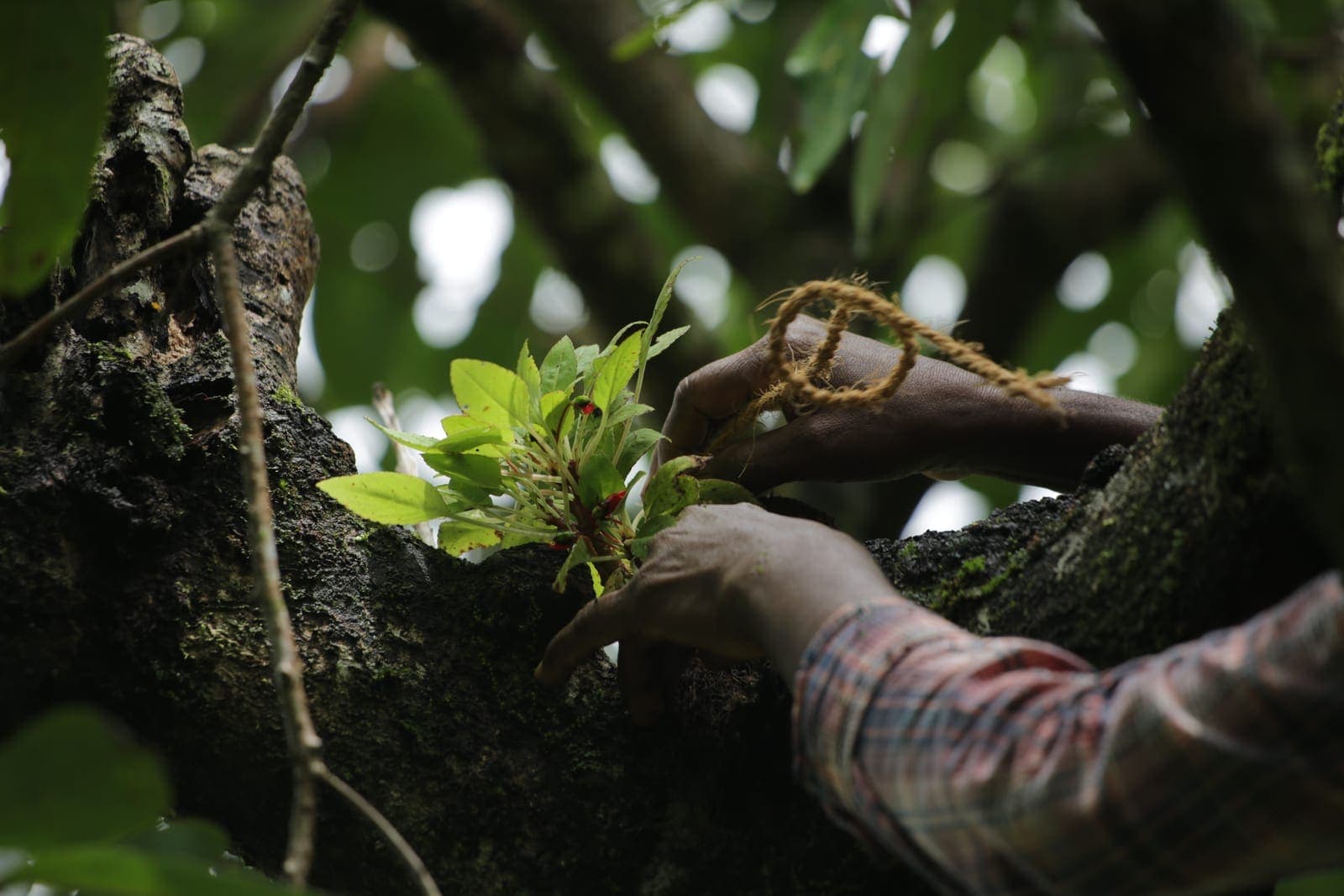
Sometimes we reach out to a leaf before we put a word to it. Just to touch. It's a strange thing with field guides, that they are based, for the maker — the writer, the naturalist — on direct observation, on contact with the real world, but that they reverse the process for the reader, for whom the words come first (or the pictures). We begin this with a hope: that something in this guide will catapult you to the forest, to the garden, to any wild place or being — to touch, with your hands and all your senses, with your body and heart and your mind — to embark upon your own joyful adventure through a field, or open country (in old Saxon); to earth. Field implies cultivation, or pasture, or tending, already a strange betwixt sense with the human hand's imprint. Would that it meant "wild," but that's another thing. This is a guide to take you to that open country of nature, and through that to the deep forest, to seeing, tending and expanding the Matryoshka worlds within the rainforest canopy.
The writing moves from plural to singular to plural, as do our walks and our entanglements with each other and the marvellous webs of life that sustain us — a world that inspires us, breathes us awake every day, and that we too sustain and breathe life into. The forest insists its presence through us, and perhaps we are the subject of its field, as it opens our hearts and intrigues our minds, working upon us as we think we do upon it.
It. Such an unbecoming word for this force of nature, appearing, largely, as green. From this green the forest and all vegetal realms, the many and wondrous terrestrial biomes, are born.